
The Manifestations of Fear in America
Often, a relationship built upon a foundation of fear will sooner crumble and collapse under its own weight than its harmonious counterparts. So, did the white community’s fear of losing their authority in America’s southern colonies and states influence the America we know today? So much so, that the thousands of men and women called to take up arms against the many thousands more that were maimed, flogged, whipped, killed, and enslaved directly contribute to a 21st century America?
It is difficult to see the direct applicability that one patrolman, overseer, or owner 200 years ago may have on events of contemporary police brutality or social inequity. But one’s actions rarely transcend time, rather their fears are what remain. The white community’s fear of losing its authority manifested itself through the cultivation of legal and extralegal outlets designed to oppress slaves and freedmen, while it prompted the grotesque white supremacist theories in post-emancipation racial sciences. Ironically, these oppressive outlets and outlandish theories clearly defined the white community’s crippling authoritative insecurities. This fear was periodically and temporarily subdued by developing and implementing contentious authority figures, private or public.
Initial Attempts at White Reassurance
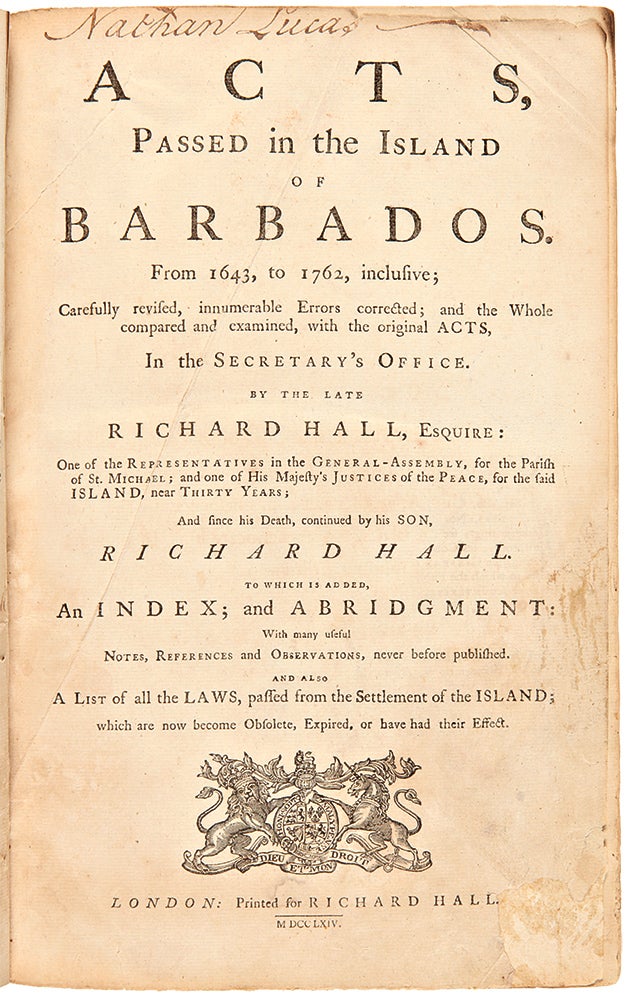
As slave populations grew, so did the white community’s panic over their seemingly diminishing authority. To combat this some societies, America and Barbados included, followed an interesting pattern when developing prejudicial authority figures. Barbados’ original law holding overseers, owners, and privately hired individuals responsible for securing the white community’s authority became replaced in their 1661 slave code, which put the entire white community on the hook. Despite several revisions over the decades, the 1688 codes still required, “…all masters, overseers, and other persons whatsoever, to apprehend and take up any negro or other slave that shall be found out of the plantation of his master or owner at any time…” However, two-thousand English soldiers were eventually sent to the island solely to patrol slaves after revolts in 1675 and 1692 evoked greater fear within white community members.
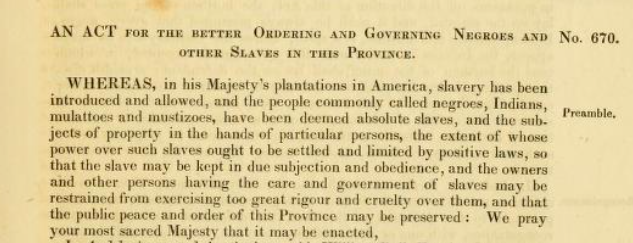
The threats and realities of slave insurrections were similarly combated in South Carolina. One year after the Stono Rebellion, the 1740 Act for the Better Ordering and Governing of Negroes and Other Slaves in South Carolina required, “…every person in this Province, to take, apprehend and secure any runaway or fugitive slave…” The white community’s fear of losing its authority took form in actual and potential slave insurrections that stimulated legislation like that above. But legislation generally remained a reactionary force, thus leaving the white community feeling the need for immediate authoritative figures to protect their power. This desire illuminated the evolution of the community’s attempts to retain power: first, only the owner and whom he hires are responsible for preventing rebellious slave activity, as their authority began to come into question, the entire white community became responsible, and once their gestures were deemed futile it was time to designate a portion of the militia to suppress white community fears.
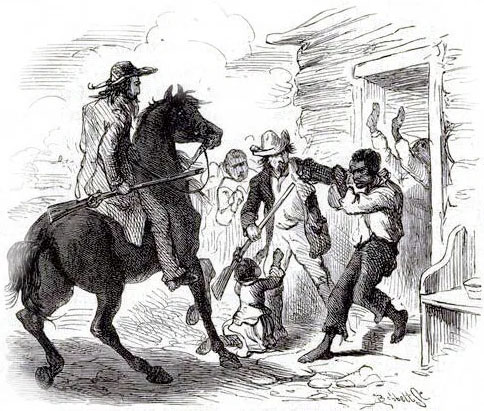
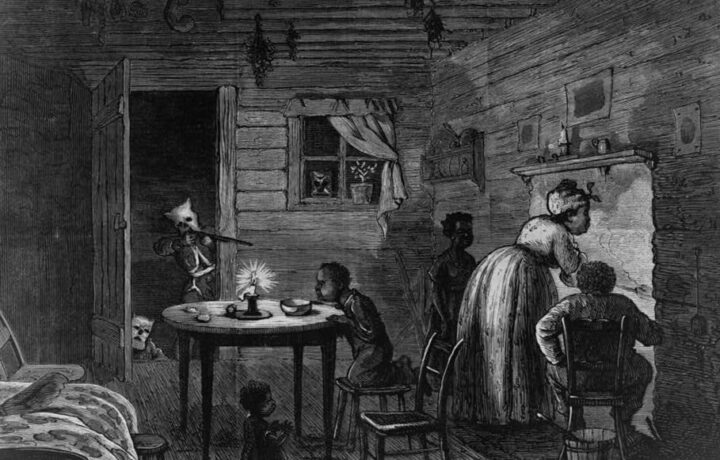
Throughout the developmental process above, the purpose of these different oppressive authorities often remained as a shared constant: to prevent or destroy any threats, imagined or real, of slave insurrections through hindering and capturing runaways. Slave patrols in the southern colonies, whether appointed by officials or volunteered privately, ferociously pursued their purpose. They enforced laws and incited fear into slaves through loosely legal measures, while overseers and owners were private authority figures. What was subject to constant change, however, was the severity in which this purpose was seemingly fulfilled by white community members. Patrols everywhere were to enforce curfew law, inspect passes of countryside slaves, badges for city slaves, search slave quarters, break up any gatherings that were deemed too big at the patroller’s discretion, and seldom inquire about suspicious whites.
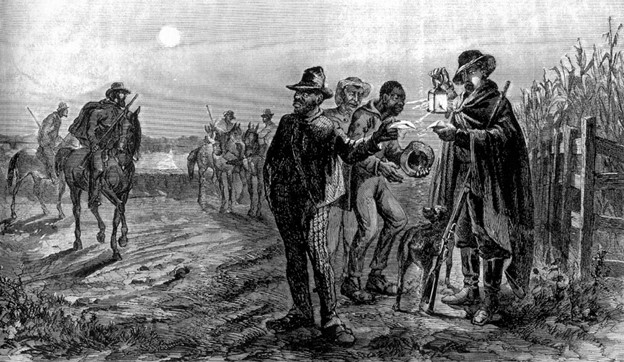
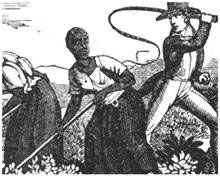
Stephen E. Maltby, a resident of Alabama, claimed it was general practice to patrol every night and recollects a cruel, yet nonchalant whipping early one Sunday morning of several boys ranging from eight to twelve years old. A patrolman had ridden up on horseback, proceeded to get off and grab a cord from his pocket. He tied one of the boys by his thumbs to a rack, “and with his horsewhip lashed him most severely” only to untie him afterward and ride off without ever saying a word. Conversely, overseers, although responsible for preventing rebellious acts, were paid according to how much work they forced out of the hands of the enslaved. Horace Moulton, after living in Georgia for several years, claimed overseers were generally ‘loose in their values’ and masters believed that an overseer’s worth was equal to the fear he instilled into slaves.
Consolidation & Separation by Virtue of Fear
The division between private authority figures like owners and overseers and public authority figures like patrols grew more so in times of peace rather than violence. Tranquility divided the white community among groups who preferred different remedies to suppress their fear of losing authority, i.e., private versus public authoritative figures. Unrest, whether caused by foreign invasion, slave insurrection, or southern secession, heightened the white community’s fear. Thus, slightly giving way to communal unification, but mostly rash decisions made to retain any authority they could. Patrolmen habitually disregarded human life, their superior’s demands, the owner’s paternal or materialistic wishes and would rarely be held accountable for his actions.
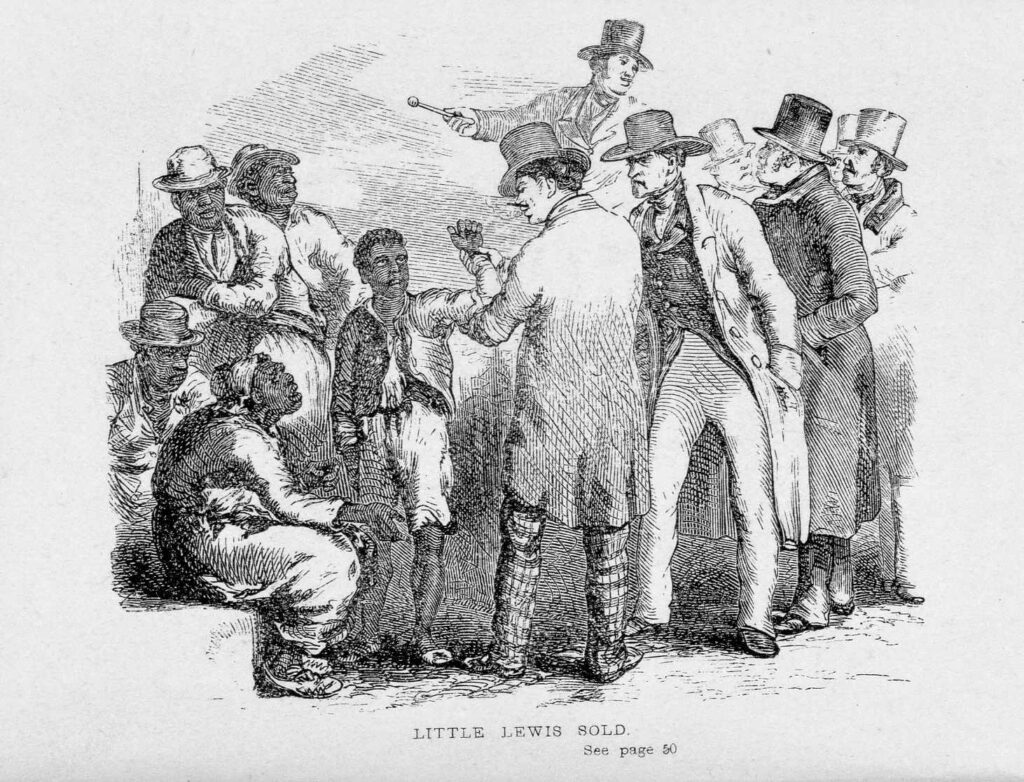
In 1823, Tobias Boudinot watched as a runaway slave in Nicholasville, KY was apprehended by patrolmen and beaten with a knotted cane “until the club was broken and he made tame”. Although gruesome, generally, the runaway slave’s torture had only just begun once caught by patrolmen. Rev. William Dickey’s letters published in ‘Human Rights’ for August 1837 reflected on the unspeakable act committed by Thomas Jefferson’s nephews, Lilburn Lewis, and his brother Isham. They deemed it necessary to tie down and murder a seventeen-year-old slave named George for breaking a pitcher of water. Lewis proceeded to “hack off George at the ankles with a broad axe” working his way upwards while tossing his body parts into a nearby fire “until all was in the fire”. The stark differences between punishments inflicted by private and public authority figures for the white community became less dividing when peace was replaced with warfare.
Foreign invasions, although catalysts for the white community’s unification, were also troublesome since able-bodied men were called away to the front lines from patrol duties. Domestic unrest, like slave insurrections, proved to incite unification while avoiding the problematic decline in patrolmen. The Civil War, however, was no foreign invasion, nor is it a slave insurrection. Times of foreign invasion called for non-exempt or willing patrolmen to fight at the front lines where slaves, whenever they could, fled to in their pursuits of liberation. In the patrolman’s absence, the white community’s fear of losing authority through slave insurrection intensified, which resulted in the rise of more impulsive, and less accountable authority figures.
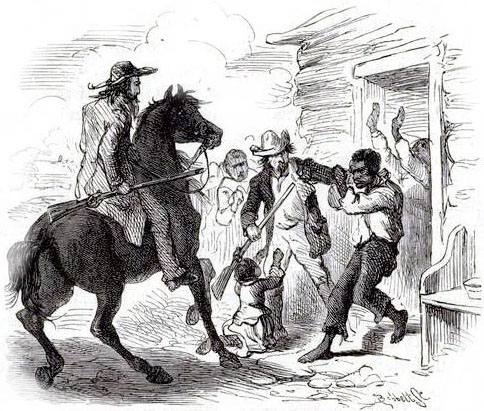
Slave insurrections, imagined or real, resulted in a greater number of fearful patrolman adamant to punish swiftly and severely. Hiram White, resident of North Carolina for 32 years, claimed times of threatened insurrection resulted in such heinous retaliation by patrolmen that he could not partake regardless of the Governor’s orders. “Around the 20th of December 1830, a report was raised that slaves in Catham County N.C were going to rise on Christmas Day,” consequently, orders were given mandating patrol duty for all men subject to the militia. They searched slave quarters and homes of free African Americans for any kind of books and prints, “bibles and hymn books were particularly mentioned”. If anything was found, “our orders were to inflict punishment by whipping the slave until he informed who gave them to him, or how they came by them”. Slave insurrections justified the white community’s pervasiveness regarding their tactics and extremity of their violent punishments. While foreign invasions depleted their resources, forcing ill-trained, irresponsible, and often nefarious individuals to become authority figures.

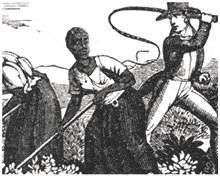
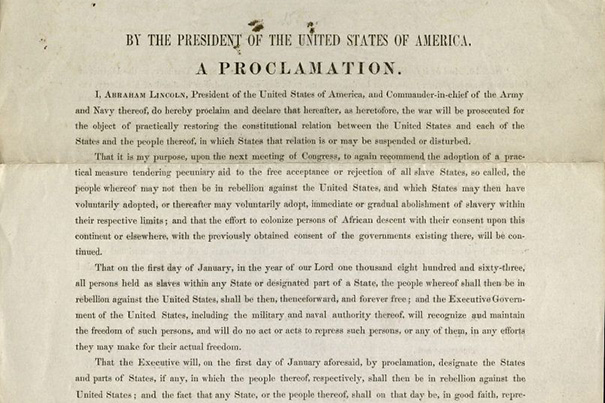
The Civil War was a blend of both slave insurrections and foreign invasions, the Southern white community justified its use of exceedingly severe punishments and tactics while losing a majority of their able-bodied patrolmen. Conscription in 1862 drew capable patrollers to the Confederate army and overseers who took advantage of their exemption status or volunteer groups were once again the white community’s only defense against slave insurrection. Later that year, Lincoln’s Emancipation Proclamation instilled unnerved hysteria among the southern white community. Their fear of losing authority had now become an anxiously awaited reality.
When Freedom & Fear Clash
Previously, it was common for free people of color to be attacked if they trekked too close to a hostile landlord’s property. When J.G. Baldwin traveled in Charlotte, North Carolina he had witnessed this first-hand, and after asking the landlord why “he replied that he owned slaves and would not permit free blacks to come into his neighborhood”. Although this shared fear of inspired liberation within slaves, occasionally instilled by the mere presence of free people of color, was soon to be further obsolete, it was far from erased. When paired with an ever-growing absence of overseers and owners, patrol brutality intensified among the few underaged, elderly, and wounded confederate vets that replaced the once paid, quasi-accountable, and ever merciless patrol force.
Freedmen presented a threat to the white community greater than any slave possibly could. They represented the beginning of a large-scale change of the literal, legal, social, and cultural chains that once forcibly bound slaves for centuries. Unfortunately, the change did not always mean the bonds broke, rather they took the next form which accommodated the white community’s fear. The war’s end did not immediately dismantle patrols, erase their self-perceived purpose, or relinquish the white community’s fear. Some areas even brought their patrols back in 1865 along with the Black Codes and post-emancipation racial sciences.

The Black Codes tried to stunt any social or economic growth freedmen could retain by enforcing absurd punishments for simply freedman gatherings and vagrancies. The Reconstruction Act of 1867 deemed there to be no legal government in the south, thus dissolving the black codes. The 14th amendment was supposed to provide equal protection to all but failed on many fronts and the lack of confederate veterans in both local and national government became compensated by agricultural and police clubs, mutual aid clubs, and white vigilante groups like the Ku Klux Klan. The white community’s legal recourse to suppress its fear was 19th century police force whose excessive racist brutality and lack of accountability closely resembled their 17th century forefathers. Extralegally, bands of racist whites strategized how to cripple African Americans, often literally.
Freedmen often mistook Klansmen for patrols because they both inspected passes, rode horses at night, and inflicted harsh punishments. However, these similarities led to the Klan’s and patrol’s distinct self-perceived inherency within the white community. Patrolmen were designated to keep slaves within local boundaries, while the Klan was designed to drive African Americans out. The legal protection patrols once had was removed for the Klan, which contributed to their anonymity, atrocious brutality, and an even greater lack of liability. With no officials or owners to partially defend African Americans, scarce court convictions against Klansmen, and limited protection from the Freedmen’s Bureau, African Americans were constantly harassed violently, forced to migrate, and regularly murdered.

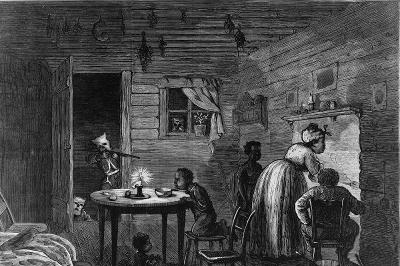
As southern democrats favored the vicious physical persecution of African Americans, racist northerners often turned to academia to tame their insecurities concerning the white community’s authority. Harvard scientist Nathaniel Southgate Shaler used outdated anatomy and statistics to quell these concerns. Racial scientists like Shaler nicknamed their burden of the freedman, passed on by their inconsiderate fathers and grandfathers, “The Negro Problem”. This problem was unique to America and of the utmost importance, for Africans were considered a threat to America more so than any Irishman, Italian, or any other so-called inferior race. As quoted in Khalil Muhammad’s work, The Condemnation of Blackness, Frederick Douglass once wrote “Every hour sees us elbowed out of some employment to make room perhaps for some newly-arrived immigrants, whose hunger and color are thought to give them especial favor.” The white community once again slightly stifled their snowballing fear.
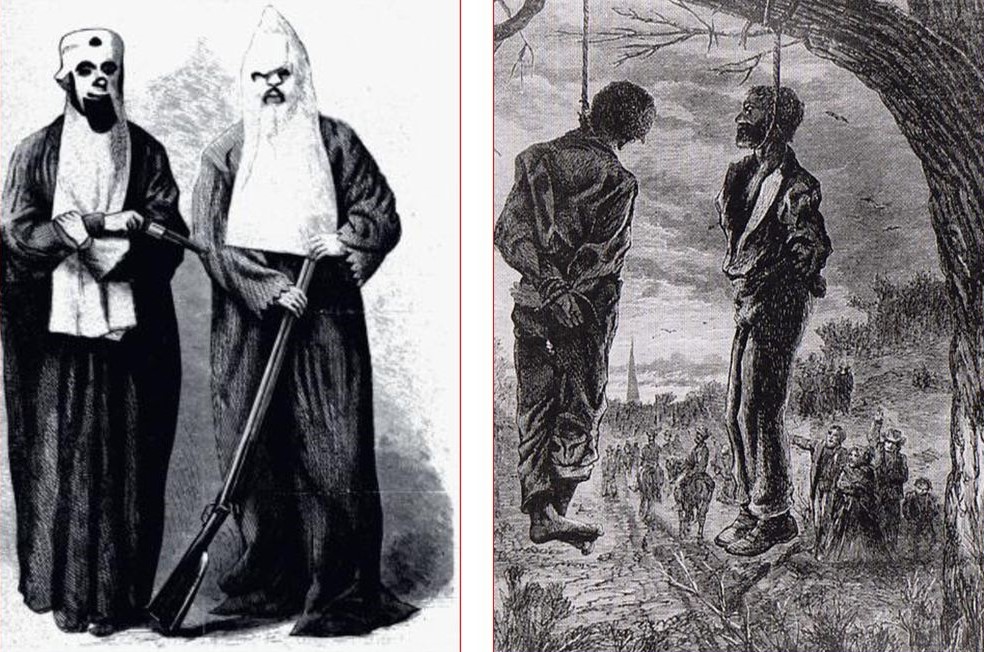

One group in particular that fed off of Shaler’s reports, other than the racist lynch-mobs consisting of southern democrats, were progressive liberal social Darwinists. They believed that participation in lynch-mobs put oneself, “on a level with the negro criminal,” and gave way to a so-called brute passion that American journalist Ray Stannard Baker believed made all whites who partook “become as savage as the negro,”. In the 1890 census, 25 years after the Civil War’s end, a shift in Shaler’s reasoning added dependency on both previous unreliable experiments of the human anatomy and statistics showing high death rates and low birth rates among African Americas. This wrongly reinforced his white supremacist ideas, as he assumed these factors must have arisen solely from black inferiority, not because of the countless modes of oppression bred by a white community’s 17th century fear of losing authority.
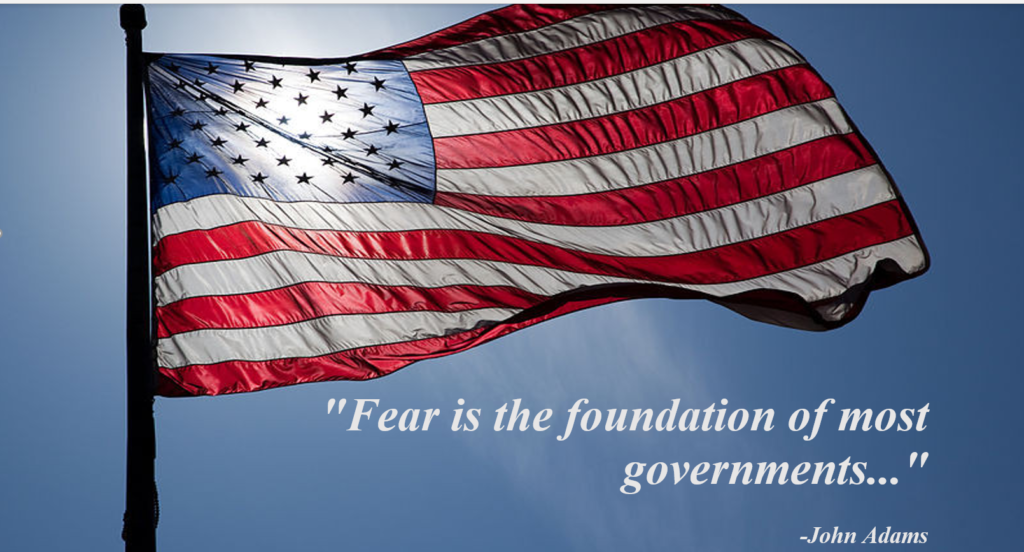
Fear can begin to run the life of anyone. As it becomes interchangeable and indistinguishable from the corporeal or intellectual matters that we attach it to, we begin to lose sight of what it is we are truly scared of. In the case of America, fear became tightly woven with race. The white community’s fear of losing its authority manifested itself through the cultivation of legal and extralegal outlets designed to oppress slaves and freedmen, while it prompted the grotesque white supremacist theories in post-emancipation racial sciences. So, as time goes by and America continues to struggle with racial inequity, police brutality, misrepresentation, and polarization, keep in mind that the white community’s fear of losing authority in colonial America is alarmingly similar to the fear you inherently instill within those who try to govern you.
Written by D. Buskett History Major, LMU 2021.
Further Reading
Baldwin, J.G. Testimony of Mr. Baldwin’s Time Spent in North Carolina. Edited by American Anti-Slavery Society. American Slavery as It Is: Testimony of a Thousand Witnesses. New York: American Anti-Slavery Society, 1839, 64.
Boudinot, Tobias. Patrolmen Testimony. Edited by American Anti-Slavery Society. American Slavery as It Is: Testimony of a Thousand Witnesses. New York: American Anti-Slavery Society, 1839, 92.
Dickey, William. Rev. Dickey’s Letter’s to Rev. John Rankin. Edited by American Anti-Slavery Society. American Slavery as It Is: Testimony of a Thousand Witnesses. New York: American Anti-Slavery Society, 1839, 93.
Hadden, Sally E. Slave Patrols: Law and Violence in Virginia and the Carolinas. Harvard Historical Studies, v. 138. Cambridge, Mass: Harvard University Press, 2001.
Hall, Richard. Acts, Passed in the Island of Barbados : From 1643 to 1762. London, 1764.
Maltby, Stephen. Testimony on the Conditions for Slaves. Edited by American Anti-Slavery Society. American Slavery as It Is: Testimony of a Thousand Witnesses. New York: American Anti-Slavery Society, 1839, 64.
McCord, David. The Statutes at Large of South Carolina. Vol. 7. Columbia, S.C. : A.S. Johnston, 1836.
Moulton, Horace. Narrative and Testimonies of Rev. Horace Moulton. February 18, 1839. Edited by American Anti-Slavery Society. American Slavery as It Is: Testimony of a Thousand Witnesses. New York: American Anti-Slavery Society, 1839, 109.
Muhammad, Khalil Gibran. The Condemnation of Blackness: Race, Crime, and the Making of Modern Urban America. Cambridge, United States: Harvard University Press, 2010.
White, Hiram. Testimony of Mr. Hiram White- A Native of North Carolina. Jan. 22, 1839. Edited by American Anti-Slavery Society. American Slavery as It Is: Testimony of a Thousand Witnesses. New York: American Anti-Slavery Society, 1839, 51.