

There has always been a certain fascination of the human spirit with the grim and macabre. With the pervasiveness of cruelty and disaster, one relatively modern phenomenon stemming from such matters is that of “Dark Tourism,” which capitalizes on the ghastly, the tragic, and the mysterious. In particular, carceral institutions are among the most popular sites of Dark Tourism. However, the various ways in which prisons publicly present themselves in relation to their haunted reputation point to intrinsic issues around commercialization and the perpetuation of longstanding narratives rather than engaging critical discussion. Because of this, financial and reputational purposes typically overshadow legitimate educational intents when it comes to the use of a site’s supposed paranormality.
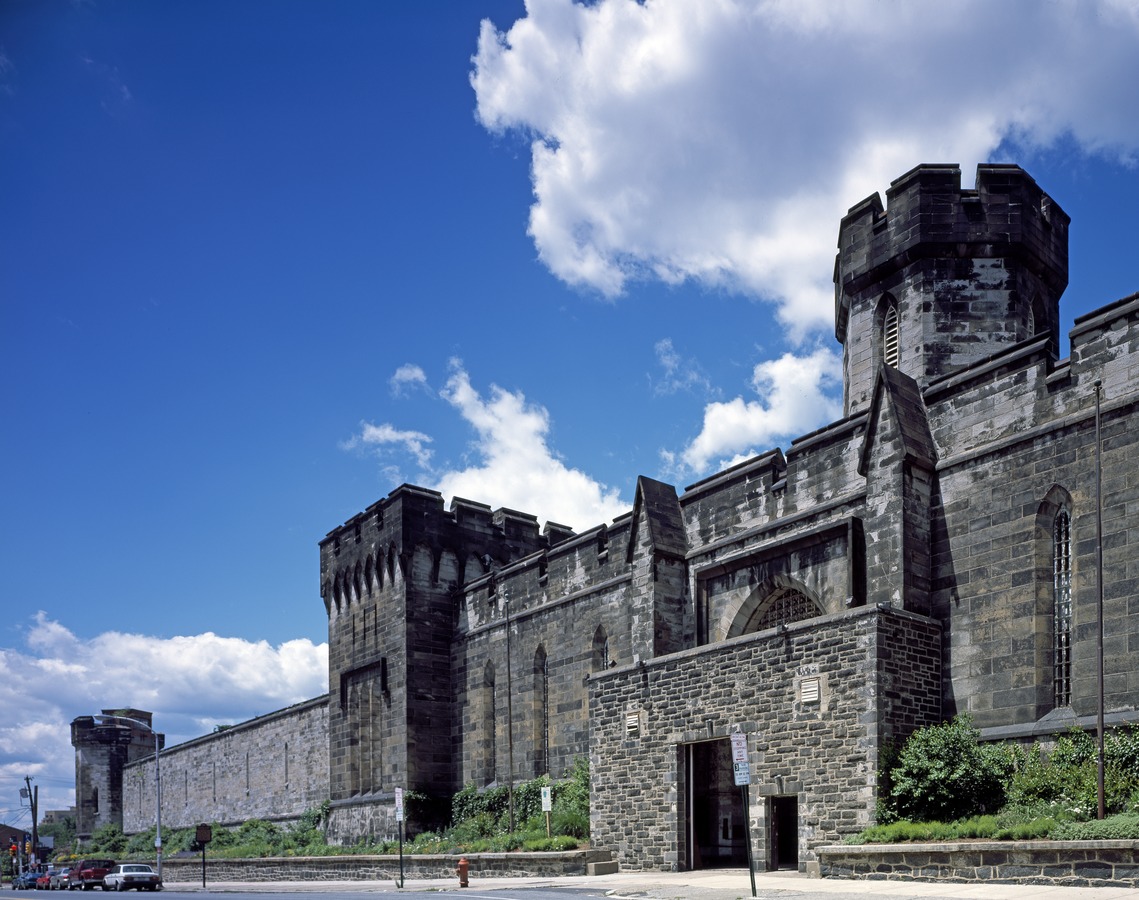
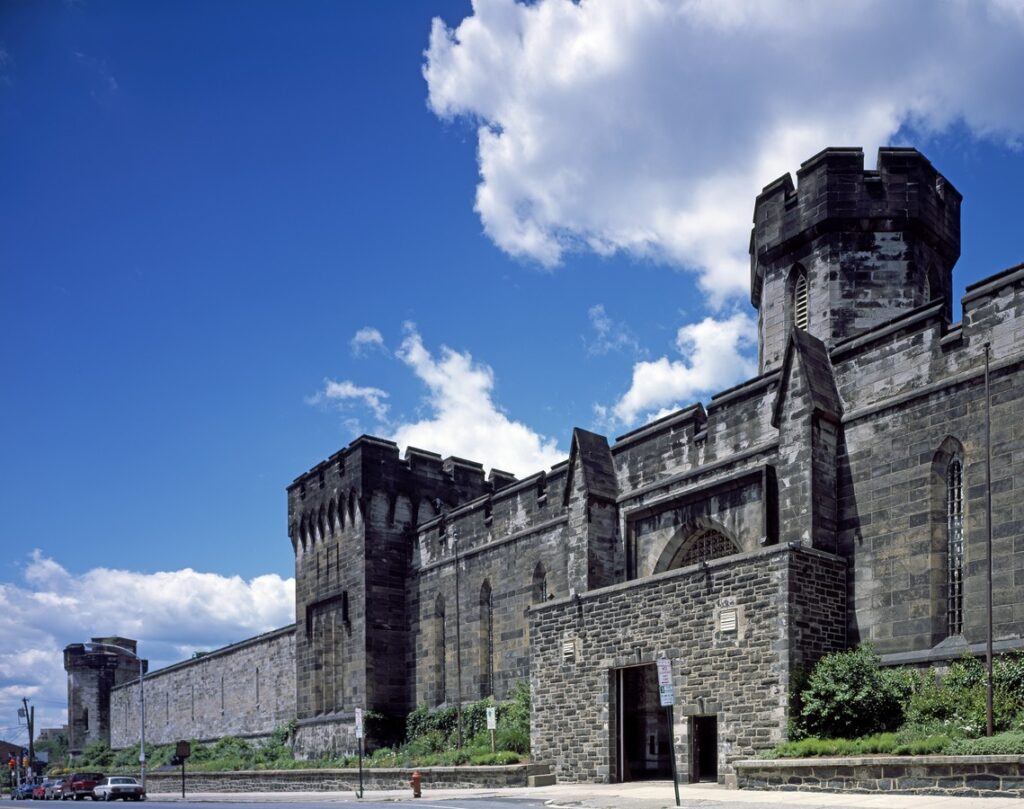
The differing ways that prisons officially represent their institutions in regards to alleged hauntings emphasize the struggle between education and entertainment at Dark Tourism sites. More recently, scholars have suggested Dark Tourism to be not a singular phenomenon, but more of a “spectrum” of shades of lightness and darkness dependent on the ways a site interacts with this reputation (Stone 145-147). The scale to which prisons indulge in their status, specifically in regards to an incorporation of the paranormal, reflects this spectrum through the variation of cases and diversity between these same kinds of locations. For instance, at Philadelphia’s Eastern State Penitentiary, one of the most notorious, and supposedly haunted, prisons open to the public in the United States has affirmed, such as in statements by tour guide Ben Bookman as reported in an NPR article, that it is essential to remember that the inmates of Eastern State were real people, and so, the staff does “not claim that the prison is haunted,” and instead they simply run “a haunted attraction” (referring to an annual Haunted House set up at the site during the Autumn). From this, it is apparent there is an intentional distinction made between the hauntings and the telling of the institution’s history. Because supernatural aspects are confined to the realm of entertainment, the prison can present itself as maintaining an appearance of historical objectivity while commercializing on such spectral fascination.
In a stark contrast to the Eastern State’s presented divide, Missouri State Penitentiary in Jefferson City is far more open about such matters. While the prison’s ghost tours and historical tours are separate events, unlike Eastern State, nine distinct paranormal experiences are offered on Missouri State’s website, including guided explorations, ghost hunting classes, and overnight investigations. Stories of the supernatural are openly endorsed, integrated into the prison’s official public image. The line between truth and fantasy is intentionally blurred by the attraction itself, where ghost stories are inclusive to the history rather than simply being colloquial allegations or an explicit fiction. However, the extent of how much this aspect truly does engage in an educational manner is difficult to gauge, as information about the precise content of the tours are not available. Despite this, what can be understood is that commercialization is far more evident in this case than at Eastern State. This in turn highlights the question of the level at which the adoption of these Dark Tourist appeals hinders a prison, as the substantiated history of a site tends to become blotted out by these more flashy aspects if not kept in check. Regardless, even in cases like Eastern State, the appeal of the Dark is still capitalized upon, demonstrating that while it is simply pragmatically viable to take full advantage of the haunted to maintain relevance, there is an approach which does not jeopardize the integrity of a site. After all, the primary purpose of prison visitation is still education first and foremost, as surmised in a compilation of multiple studies (Light 286). Prisons opened for tourism are, at least in the eyes of the public, primarily informative, and so, a loose line between verifiable truths and legends might sour a site’s reputation.
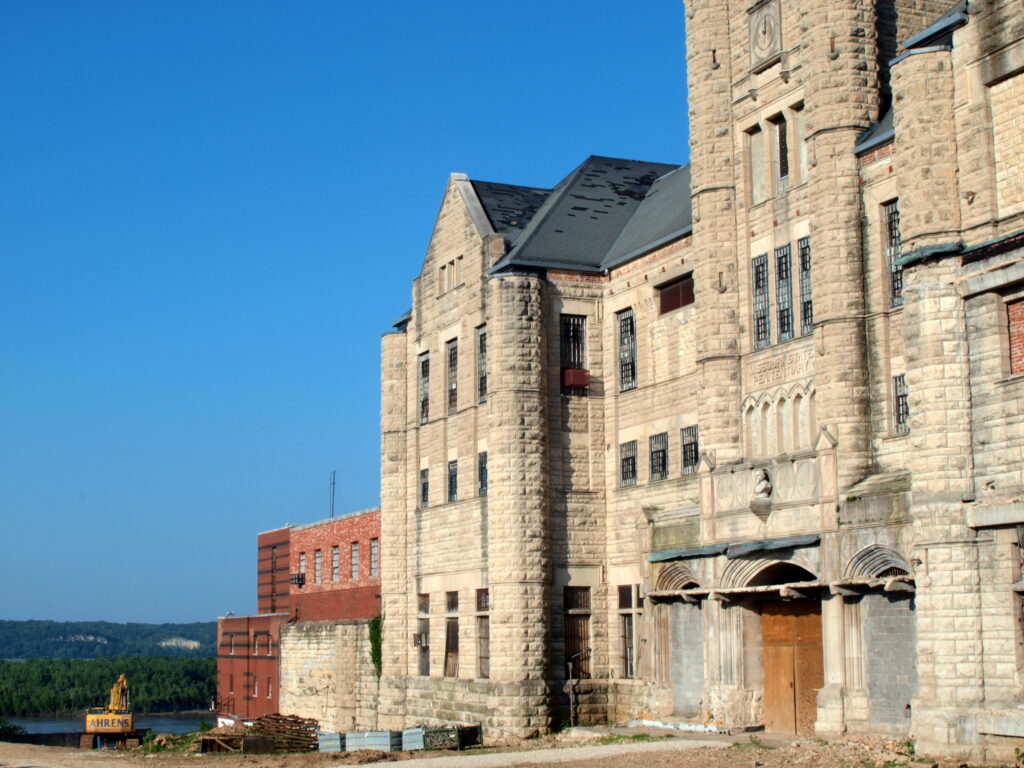
(Uploaded to Wikipedia by CosmiCataclysm on 21 June 2009 as a personal work, https://commons.wikimedia.org/wiki/File:Missouri_State_Penitentiary,_Jefferson_City.jpg)
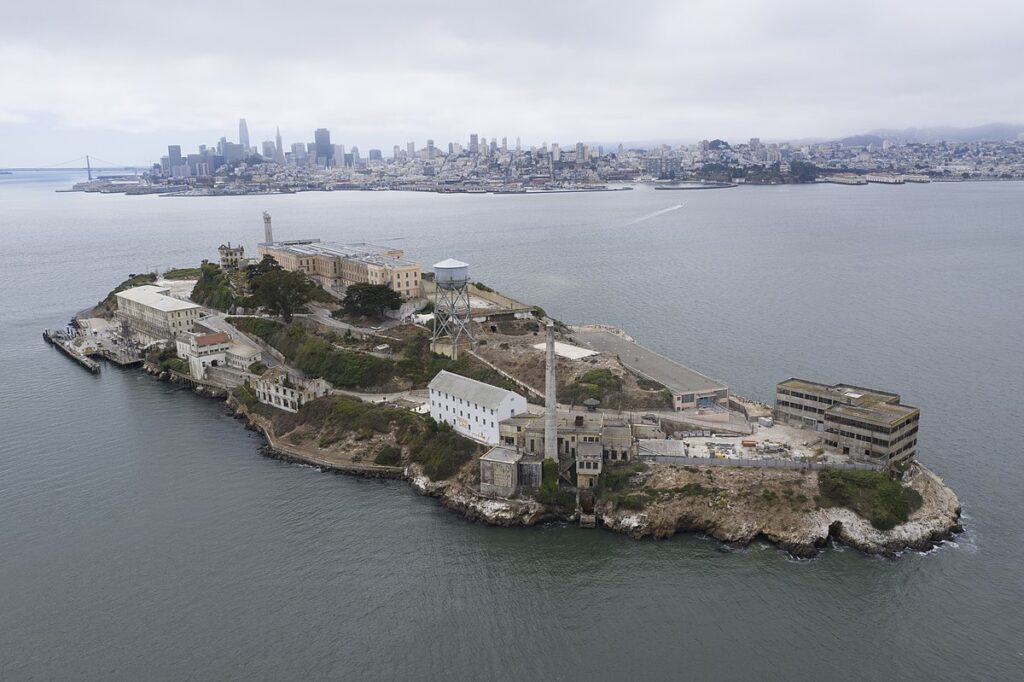
While prisons themselves can control the degree at which ghost stories are incorporated into the official narrative of the site, third parties are an entirely different beast, as they do not possess the same consideration of restraint, demonstrating how attempts to counter Dark standings are not as simple as making a formal statement. Even if a prison’s haunted nature is openly rejected, unofficial tourism groups and sellers still benefit immensely in perpetuating claims of the supernatural. For instance, while Alcatraz’s Official Night Tour appears to be purely historical, other tourism services such as Wild San Francisco blatantly capitalize on the supernatural, drawing attention to tales of supposed ghosts like an inmate named “Butcher” or the notorious Al Capone, and even proclaiming “Our haunted tour has been known to stir up some restless spirits.” Although most officials prefer to speak about Alcatraz’s history in a more objective and constructive manner and move away from its depictions in popular culture, various tourism companies and merchandisers actively perpetuate the notion of its haunted quality, where “the Rock is less an island in these commercial streams than a highly marketable brand name” (Strange and Kempa).
Such perceptions regarding a prison and its intertwining with the ghostly are further upheld by informative websites and travel publications like Adventure.com, where Eastern State’s historical practices are directly highlighted and discussed in conjunction with supposed spiritual occurrences, or Legends on America, which recounts the spectral encounters of Alcatraz’s D Block. In addition, ghost hunting shows, such as an episode of Travel Channel’s Ghost Adventures at Missouri State, have only expanded the public understanding of these sites as haunted. Attempts to move away from any such reputation is further undermined by alleged reports of people who have worked at the prisons themselves, such as employee Gary Johnson’s report of a ghostly grasp and “tormented faces” at Eastern State (documented in the NPR article), and the 1992 featuring of Alcatraz prison in Sightings, in which “several of the Park Service staff confirmed the haunted history of the prison” (as stated in the Legends of America article).
Due to these already persisting reputations, focus on the hauntedness of prisons, whether official or unofficial, is an act of catering to the public’s preconceptions, even when running the risk of distracting visitors from more authentic historical details and grounded interpretations of prison realities. Researchers like Carolyn Strange and Michael Kempa have pointed out how “designers of dark tourism sites arrive on the scene after places of suffering have become famous,” inheriting “official accounts and popular stories” in an attempt to constantly “catch up with and cater to tourists’ preconceived notions and expectations” (Strange and Kempa 400-401). Rather than being fabrications of institutions themselves in an attempt to generate income, the supernatural mythologies of sites are developed more naturally and later repurposed for capital. This is why a site like Eastern State could still be well known for its ghosts while not actively endorsing such accounts, aside from a fictional amusement, and why a location like Missouri State inversely is able to profit substantially from this same appeal.
Not only does the prevalence of ghost stories manifest in a self-propagating condition that can be exploited, but this very same nature also acts to reconfirm traditional long-standing views of a site. One of the more famous spirits at Missouri State, known as “Fast Jack,” is reported to wander the prison wearing a lab coat, according to an article from Legends of America, and thus imagined to have been a malicious medical trustee in life. Rather than being an individual based in a verifiable history, figures like Fast Jack are something of pure folklore, utilized as a sort of representative for a broader historical group. This type of ghost story is nothing unique, and could be compared to the ghost of “Molly,” a slave specter of the Sorrel–Weed House in Savannah, Georgia said to have an “affair” with a white man (Miles 21-47). As noted by professor Tiya Miles, while Molly “seems not to have been a real person, many young women with stories like Molly’s populated the slave quarters and surrounding plantations of antebellum Savannah,” all the while calling out the tendency to romanticize the sexual abuse of Black women by white men of the era in calling the relationship “an affair” (Miles 40-42). Although there is certainly potential to utilize stories like Fast Jack or Molly to highlight the injustices of the past to spark a critical contemplation of mainstream narratives, the reality of the situation is that their purpose is more for adding credence to an already existing understanding of these locations and their dynamics. Miles has also highlighted how continuing such notions by way of archetypal phantoms disadvantages historically underprivileged groups, as such prevailing tales, at best, simply sustain accepted expectations, and at worst, devalue the real experiences of the real people who suffered at these locations.
Rather than questioning maintained understandings of a location, most Dark Tourism sites actually uphold them, simply validating a preconceived lore. This same criticism has been cast not only by Miles, but other academics in multiple fields, such as seen in a piece by John Lennon where he concludes that “dark tourism sites present significant evidence of selective interpretation and illustrate issues of cultural consumption and heritage commodification” (Lennon 33). Some like Dr. Duncan Light have even concluded that “two decades of research have not convincingly demonstrated that dark tourism [is a distinct form] of tourism,” and appears to “be little different from heritage tourism” (Light 275).
Even if one could look past the inherent commercial and entertainment factor in telling prison history through Dark Tourism, supernatural aspects, more often than not, help maintain an already predominant preeminence. This inevitably colors a site’s past in deep hues which actively prevent more authentic discourse. While there is merit in the appeals of the Dark in sustaining the notoriety of a location, this more often than not comes at the sacrifice of much needed criticality, even when there is an attempt to disavow certain legends. Although the shades of the dead speak volumes for an institution and its record, such shades are, in more ways than one, nothing but specters of spectacle and shadows on the wall.
Written by G. N. Katzaroff, History Major, LMU 2023
For Further Reading:
Lennon, John. “Dark Tourism.” Oxford Research Encyclopedia of Criminology, March 29, 2017. https://doi.org/10.1093/acrefore/9780190264079.013.212.
Miles, Tiya. Tales from the Haunted South: Dark Tourism and Memories of Slavery from the Civil War Era. University of North Carolina Press, 2015.
Strange, Carolyn, and Michael Kempa. “Shades of Dark Tourism: Alcatraz and Robben Island.” Annals of Tourism Research. Pergamon, March 27, 2003.
Stone, Philip R. “A Dark Tourism Spectrum: Towards a Typology of Death and Macabre Related Tourist Sites, Attractions and Exhibitions.” Tourism: An Interdisciplinary International Journal, June 8, 2006.
